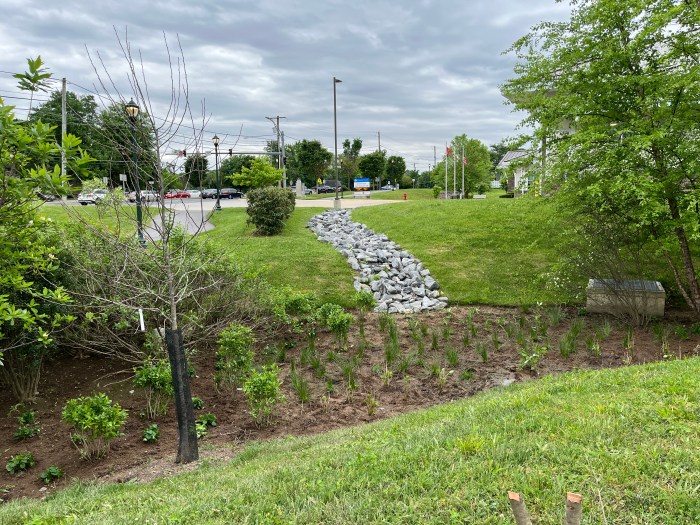
Bioretentions collect and filter excess stormwater runoff to help keep our local streams clean and healthy. They soak up stormwater, store it, slowly release it, and filter out pollutants like fertilizers, pesticides, oil, salt, and other chemicals from roads and keep them out of our streams. The slow release of water also helps prevent stream erosion and sedimentation which can be incredibly harmful to overall stream health and aquatic life.
The Department of Environmental Protection manages over 500 small-scale bioretention practices in our neighborhoods and community areas, such as libraries, police and fire stations, and community centers, across the County.

A newly replanted bioretention garden outside the Wheaton Library.
Native plants are an important part of bioretentions. Due to the extreme wet and dry conditions, the plants must be flexible and tolerant of a wide variety of conditions. For example, they can become very hot and dry in between rainstorms, then experience extreme temporary flooding in storm events. Luckily, there are many native plants that can handle these conditions. They also add beauty and provide benefits to pollinators like bees and birds.
Here are some ways native plants make bioretentions so powerful:

Iris versicolor
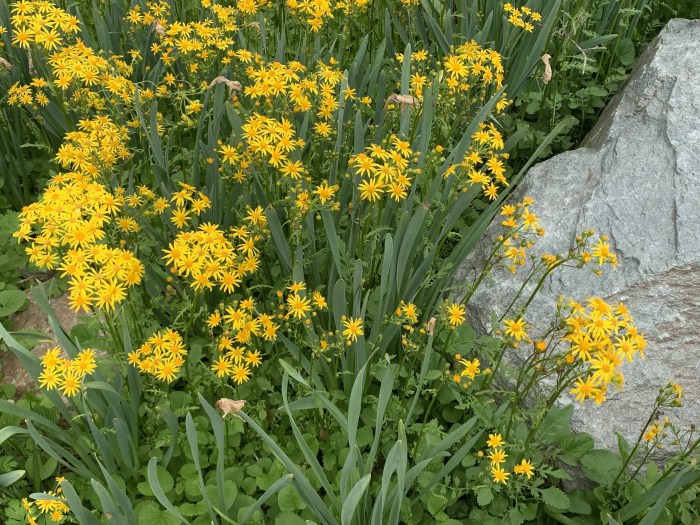
Packera aurea
Sturdy, structural plants, such as blueflag iris (Iris versicolor), help buffer a bioretention from the high volume and velocity of stormwater at the entry points, or inlets, where water first enters.
Low-growing but fast-spreading plants, such as golden groundsel (Packera aurea), can quickly cover and hold the soil in place, helping to minimize soil loss and erosion.
Plants that grow densely and fill space help to slow down and diffuse stormwater flow while also helping to choke out weeds. Orange coneflower (Rudbeckia fulgida), river oats (Chasmanthium latifolium), and certain sedges (Carex spp.), are especially effective.


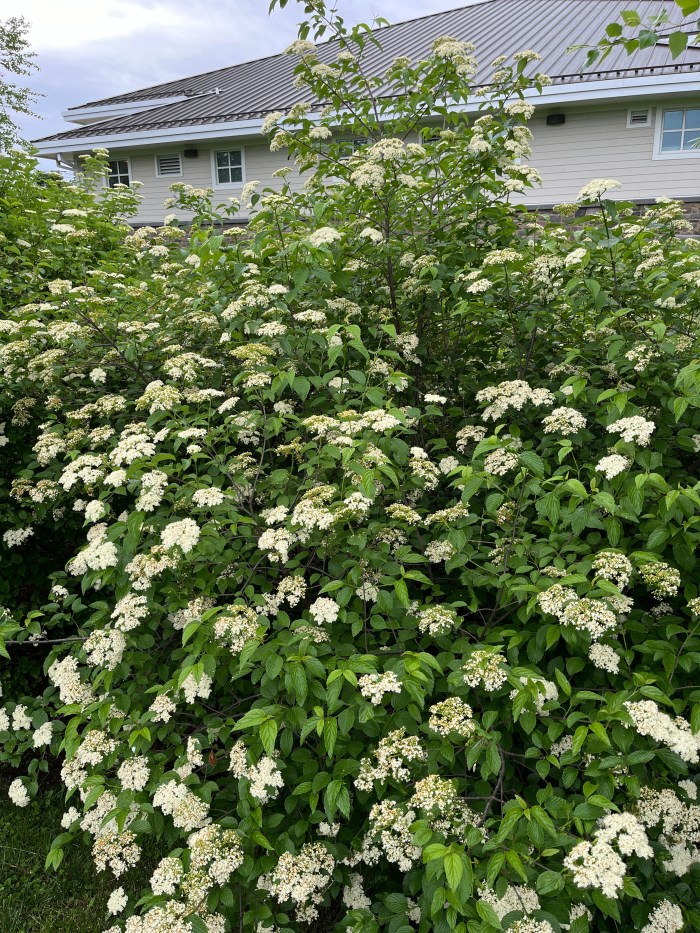
Viburnum dentatum
Shrubs are sometimes included in a bioretention. Besides adding beauty and vertical structure, their larger and deeper root systems help to further anchor the soil and take up water. They also minimize weeds by shading them out. Arrowwood viburnum (Viburnum dentatum) is a commonly used shrub, with the added advantage of providing pollinator-attracting flowers followed by berries that are an important food source for birds.
And, of course, bioretentions wouldn’t be so effective if they aren’t maintained. Each spring and fall DEP replants a selection of bioretention practices where plants have failed for various reasons, working to bring back their functionality and beauty.