


An impressive 133,274 plants were installed in RainScapes projects in Montgomery County from 2021 through 2023. That’s an average of 44,425 plants each year!
RainScapes are landscape design techniques intended to manage stormwater. Plants are used in rain gardens, conservation landscapes, pavement removal projects, and green roofs to slow down rainwater runoff, filter out pollutants, and reduce erosion – all important steps to keeping our steams and other waterways clean and healthy.
What are some of the most commonly used plants in RainScapes projects? Here are 5 of the standout plants that are attractive and easy to care for too!

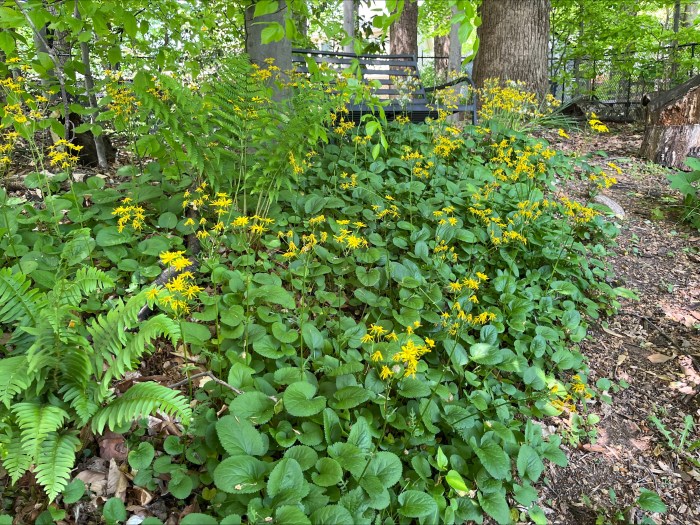


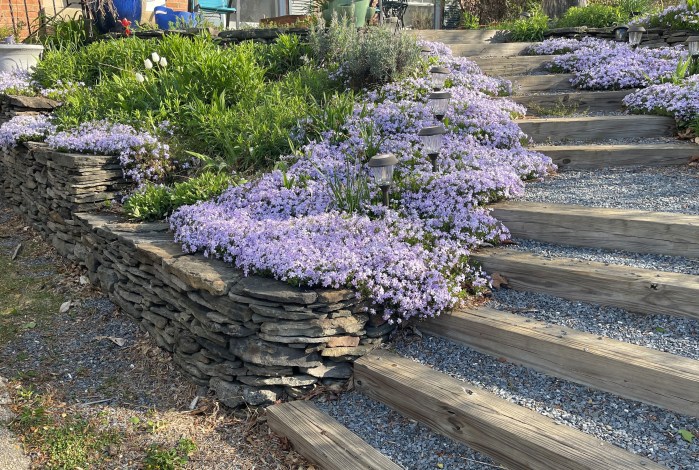
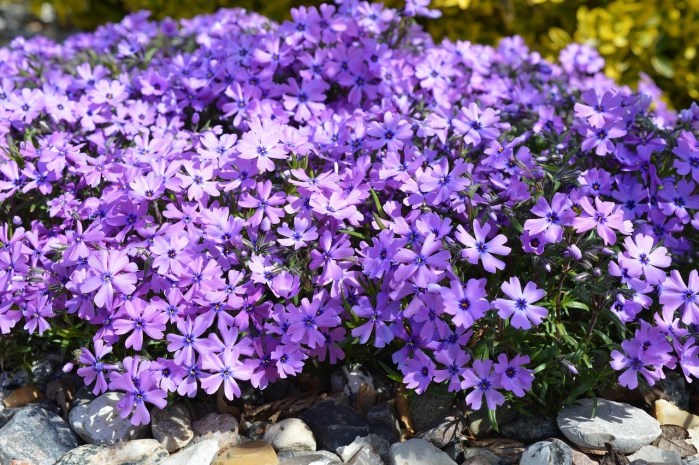
All of these are excellent groundcover plants. Creating a dense groundcover layer in a RainScape garden is important for erosion control – providing a tapestry of root systems knitting together to hold soil in place. Once grown in, groundcovers also help suppress weeds, moderate soil temperature and moisture, and provide low-maintenance aesthetic appeal.
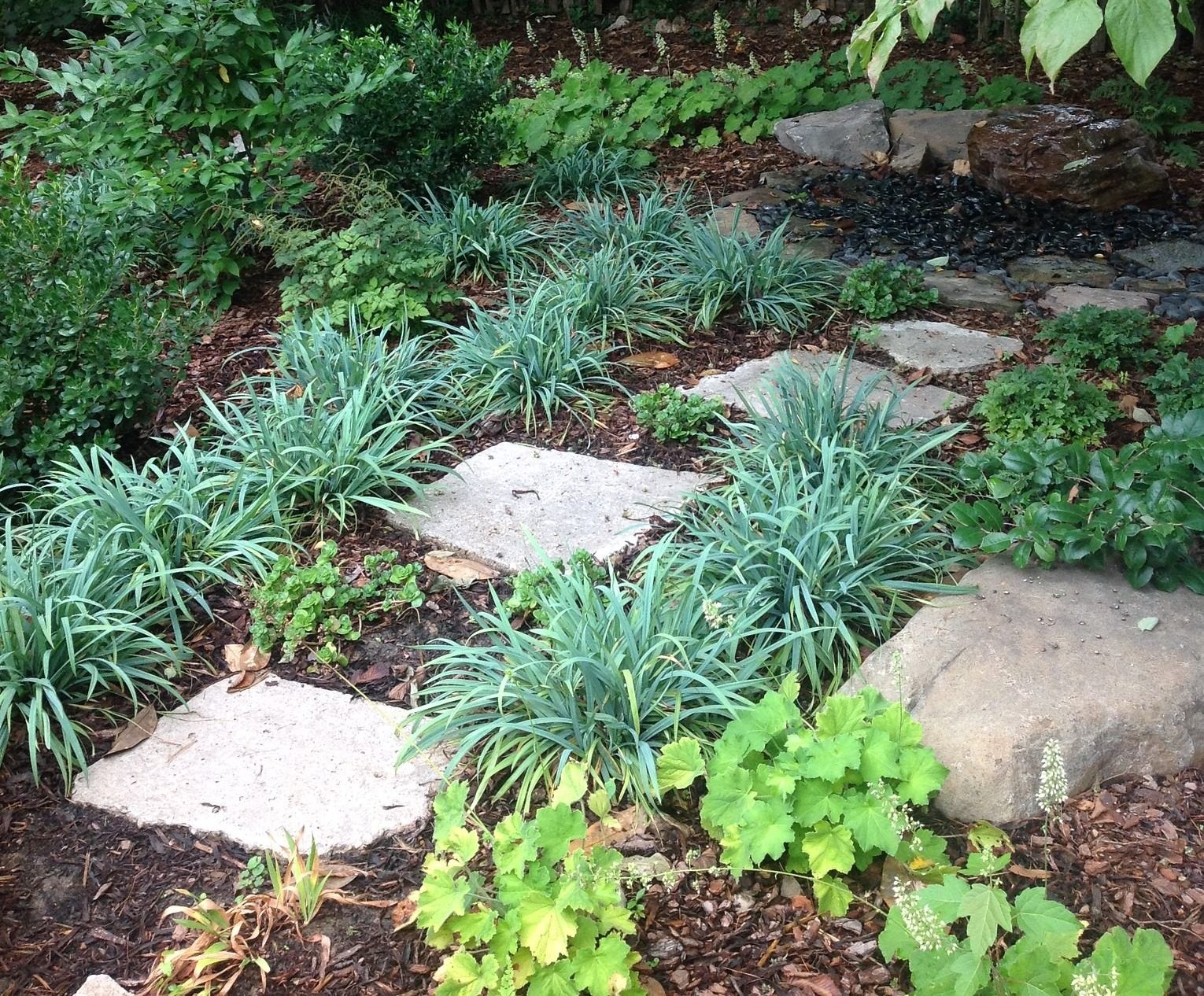
Notable in our top 5 list are the sedges (Carex spp.). As a group, sedges are grassy-like perennial plants. There are many sedge species that thrive in moist-wet to periodically dry soil conditions. They’re easy to grow and require little maintenance. Some of the wider-leaved sedges, like Carex laxiculmis ‘Hobb’ Bunny Blue (in the picture below), are an attractive alternative to non-native Liriope.


A variety of sedges were used in this front yard RainScape conservation landscape. Species included Carex laxiculmis ‘Hobb’, Carex pensylvanica, and Carex plantaginea.
Want to learn more about RainScapes and stormwater planting options for your property? Join us for our upcoming classes this month!
RainScape Your Yard: Sessions I & II
Session I: Evaluating Stormwater Solutions for Home Landscapes
Thursday, May 8, 7:00 – 9:00 pm | Virtual | $15
Learn how environmentally friendly landscapes, such as conservation sites and rain gardens, can help manage stormwater issues on residential properties. We will review steps to planning a RainScape including site evaluation and determining the type and scale of project that best suits your needs. Register for Session 1
Session II: Plants & Landscape Design for RainScape Gardens
Saturday, May 17, 10:00 am – 12:00 pm | Brookside Gardens | $25
Explore strategies to properly size a garden project, estimate plant quantities, and create an effective planting plan. Study the range of native plants for managing water runoff and supporting pollinators and wildlife. Learn the steps to develop and submit a plan that qualifies for the RainScapes Rewards Rebate. Registrants will receive a selection of free native plants to take home. Register for Session 2
We are currently accepting new applications for the RainScapes Rewards Rebate Program. Visit RainScapes.org for details and eligibility requirements.