
|
     |
|
|
|
|
|
Your guide to green living in Montgomery County, MD |
 Blog post written by 2023 Energy Intern, Vida Sulureh
Montgomery County’s Electrify MC program is an active pilot project with the goal of transitioning away from the use of fossil fuels and finding more sustainable approaches to everyday life. Geothermal technology, the use of the Earth’s natural warmth, is relatively less known and discussed. In my interview with Breton Lyhus of Rockville, MD, we discussed the advantages of geothermal heating.
Vida Sulureh (VS), DEP Intern on behalf of My Green Montgomery: So to start, how long have you had a geothermal heat system?
Breton Lyhus (BL), Rockville Resident : Since 2010.
MGM: What are the benefits of having a geothermal heat system?
BL: It’s certainly a cost save. This is a fairly, sizable cost up front when you first get it, but it saves quite a bit of money per month. The outdoor condensing unit is the other thing that’s very nice about it. It’s a very quiet system and you do not have the outdoor condensing unit- that condensing unit outside that’s like a big box with a fan on it. It’s kind of noisy when you think about it, when it’s near somebody’s patio or something like that. It doesn’t even exist with geothermal. All the heat exchange takes place through the ground. Whether you’re heating or cooling, it’s very nice in that respect.
MGM: Are there any other more major differences between a geothermal heat system and a traditional one?
BL: The unit in the house is basically very similar to a regular air source heat pump. Other than that, it doesn’t require any different kind of ductwork through the house. It’s really not that much different other than performance. It’s quieter and a more efficient system.
MGM: You mentioned earlier that you have saved money with the geothermal heat system. How much have you saved on energy bills since installing it, so since 2010?
BL: I’ve calculated it to be between $80 to $100 per month on average since I’ve got it, which amounts to roughly about $1000 a year. Since I’ve gotten it, it’s probably paid for itself after the tax credits and all that sort of thing. Some people are scared by the upfront cost of one of these systems but when you think about it, and one thing I always like to say to people because I like advocating for it, is that people don’t think twice about buying a car. Even a used car for say, $20,000 or $30,000 is about the cost of the system. I ended up getting a heavy up on the panel on the house and some zoning, so that added a little bit of the cost. The point I’m trying to make is that people don’t think twice about buying a car for that amount of money, which gives you really no return other than the usage of it. For this, the same amount of money pays for itself. No question it will pay for itself after about 10 years if you get the tax credits and all that. The upfront cost can be scary but the operational cost is very cheap.
MGM: For a geothermal heat system, how do you install it into your house?
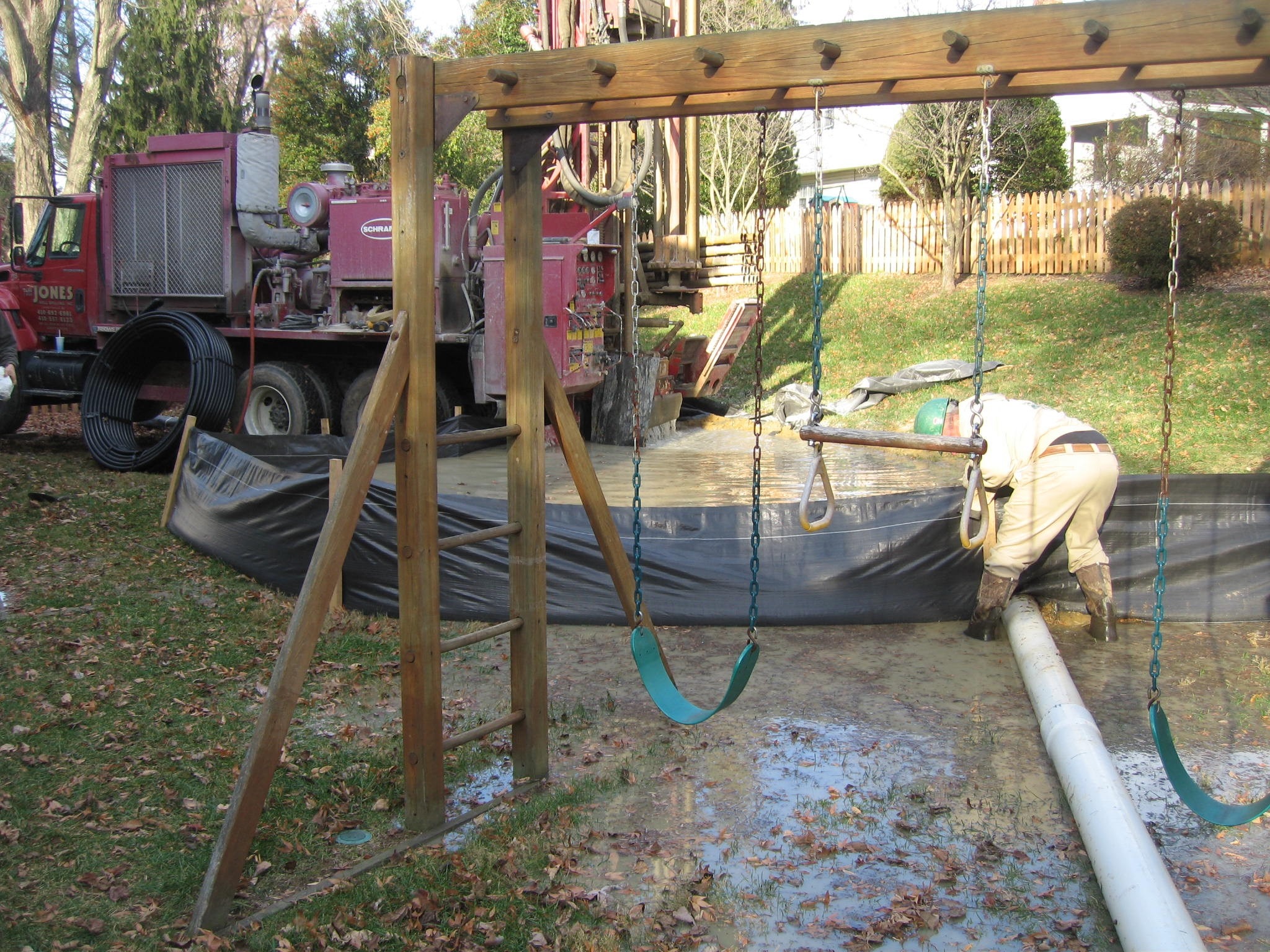
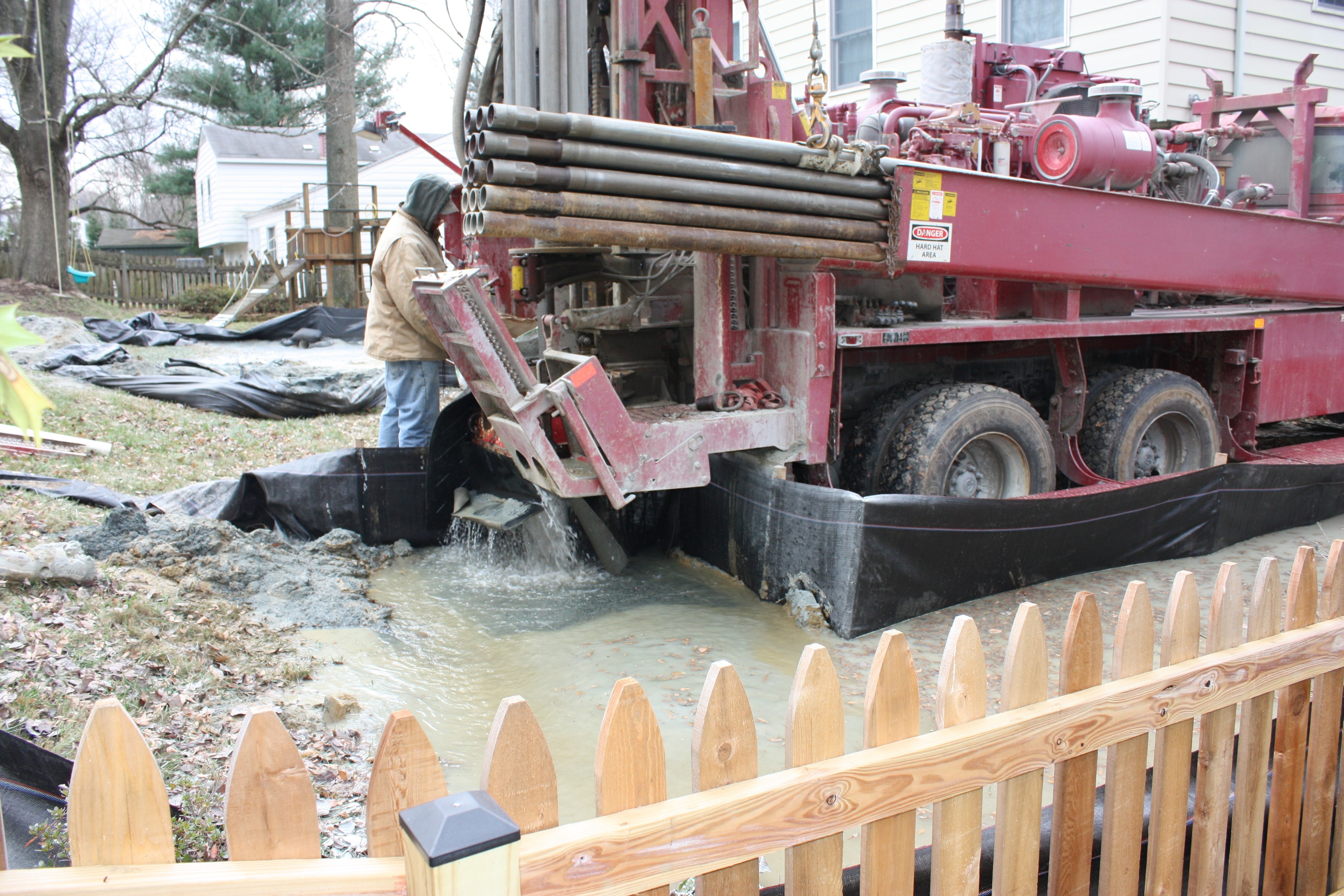
BL: They begin first by sizing it properly for what they call tonnage. Most homes in our suburban area are probably four or five ton systems. Ton inches are a heat capacity measure, and they size it for that. My previous system was 20 years old. They sized it for a five ton system which is an upgrade from a four ton system. Then they prepared the ground loops, and the ground loops are about 160 feet per ton. That’s probably changed and it’s probably less now. They had to put two 400 foot wells into my backyard because that’s about 160 feet per ton. The drilling makes a bit of a mess and creates a lot of water. Water comes up because we don’t have wells, but it stops after they put the loops back in. That’s the first part: to create with the wells that are closed so you’re not drawing water. Then they replace the system inside with a new unit and then pipe those loops through a header. They pipe it at least five feet below the surface of the ground into your house. You always want to be below what they call the freeze line, even though they’ve got an antifreeze solution. That goes into your house, and then they connect it to the new unit. After they replace what was there, they turn it on.
MGM: Is there monthly, weekly, or yearly maintenance?
BL: It is very low maintenance compared to the system I had before. I’ve had to do very little over the years to it other than the usual. It does have one of the main air filters, just like any other system does, so you want to replace them every six months to a year (no different than any other system). But otherwise, I’ve not had to pressurize the loop. It has held that pressure the whole time, amazingly. Very little maintenance. I should be up front and tell you that the unit I have has a two stage compressor. The second stage has started to make noise and get very hot, which happened after the warranty expired. I’m probably going to half to replace my unit, but I’ve had it for 14 years. It has nothing to do with the ground loops, but the unit itself (while still working) isn’t operating as efficiently as it could because of the second stage.
MGM: Would you recommend this type of system to others?
BL: Absolutely 100%. It’s quiet, it’s saving me a lot of money. It works all the time. It relies on and does require electricity, so if there’s a power outage, it won’t operate. But how often do we have power outages here? It’s just beautiful engineering and just a fantastic system. I’m quite honestly surprised that it’s not taken off. I did an analysis on ground source heat pumps many years ago actually. In my evaluation between solar and geothermal when I was first choosing some kind of renewal system, I didn’t choose the geothermal option. I had to make a lot of repairs on my traditional system. Geothermal doesn’t generate electricity, but it addresses your heating and cooling needs. Heating and cooling and the hot water heating account for 50 to 60% of your home energy consumption. I initially decided to go with geothermal years later.
MGM: : Is there anything else that pushed you to go geothermal?
BL: Yeah, that was it. I was in need of a new system. The best time to put in a geothermal system is either during new construction. Some new neighborhoods are getting it right up front. The other best time to get it is when your old system is getting very old and not performing as well. My previous, conventional air conditioning was just outdated and costly. My gas bills back in the early 2000s were high, especially in the winter- specifically $455 to $550 a month. When I switched to geothermal it all dropped down to about the 200’s. That’s why I say the average savings is $80 to $100 a month, because you don’t save that quite that much in the spring (May, April). There’s not much heating and cooling going on during those months, but during winter and the summer, the peak heating and cooling seasons, you save the most money.
MGM: Is there anything else you’d like to share about geothermal systems or about your experience or in general?
BL: There’s an organization called the International Ground Source Heat Pump Association, which I’m a member of. They have monthly discussions and they also have other industry conferences once a year in different parts of the country. You can learn more information about everything geothermal, through them. I highly recommend joining. A lot of people don’t quite understand geothermal but it’s a concept worth looking into. It takes the Earth’s heated core temperature and uses it to heat and cool very effectively through what they call a heat pump. It works day night, no matter what your weather is.
|
|
© 2011 - 2025 My Green Montgomery |

