
|
     |
|
|
|
|
|
Your guide to green living in Montgomery County, MD |
National Invasive Species Awareness Week is February 24-28! This is a time to bring attention to what invasive species are and why it’s worth the effort to prevent them.
Invasive species are organisms (plants, pests) that are not native to our area and cause harm to the environment, economy, and/or human health. Invasive plants, for example, can take over and out-compete native plants. This affects other species that rely on those plants for food and survival. Invasive species are challenging and expensive to remove!
Here we highlight three plants that are highly invasive in Montgomery County. These are often present around home yards, schools, congregations, and parks. As the name invasive suggests, they spread into just about anywhere!
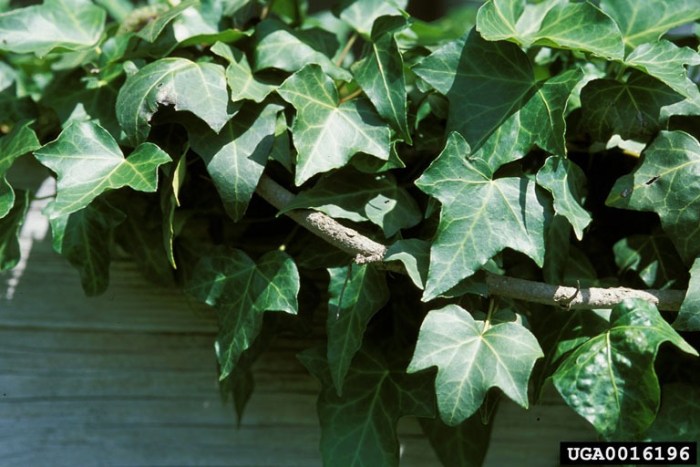
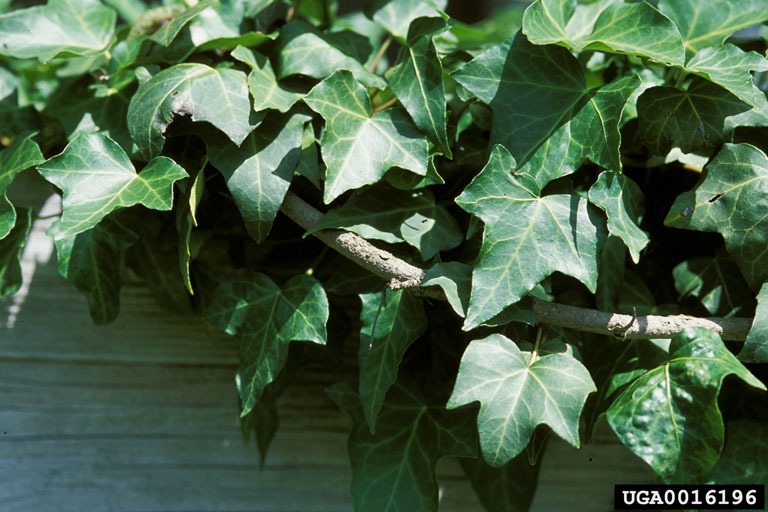
English ivy leaves – Source: James H. Miller, USDA Forest Service, Bugwood.org
English ivy (Hedera helix) is an evergreen plant that has been used widely as a decorative ground cover. An interesting fact about English ivy is that it has two life stages: juvenile and adult.
You can see English ivy climbing and damaging trees in many neighborhoods and County parks. Avoid planting it. If you have English ivy, keep it from climbing up trees and other surfaces, and consider gradually replacing it. There are many other options for ground covers that are beautiful and beneficial. Learn about other options for ground cover.

Invasive bamboo – Source: Frank Jurcik, Bamboo Invasions, Bugwood.org
Running bamboos — the tall, stalky plants that many people know as the preferred food of Pandas — have been used in landscapes to create thick green privacy screens. The problem is that running bamboo doesn’t stay put! It spreads very aggressively and many people (and their neighbors) regret that it was ever planted. It is very difficult to stop or remove.
Last year, a Maryland state law was passed to allow local jurisdictions to manage bamboo and we are working on steps for how bamboo could be better managed in the County. If you have running bamboo, the University of Maryland Extension has good information on ways to remove or contain it. There’s also a helpful page about alternative plants for green privacy screens.

Lesser celandine flowering – Source: Pixabay stock
Lesser celandine, also called Fig buttercup (Ficaria verna), is a pesky ground-covering weed that’s terribly invasive along some streams in our County. In some cases, it completely smothers the ground and prevents native plants from growing. It also gets into home lawns, especially those that are compacted or shaded.
You may see this plant’s shiny leaves and yellow flowers as early as February and then it appears to die in the summer heat. But it doesn’t really go away! Its sneaky super-power is its tiny bulbs the lie underground all year, enabling it to come back again and spread further.
Lesser celandine is one of four invasive species that have an exemption under the County’s Pesticide Law. In other words, yes, you can use a systemic herbicide to kill it (but be sure to read and follow the herbicide label instructions for precautions). Try manual removal first, by digging out the whole plants and bulbs. Learn more about the exemption. Learn more about the Pesticide Law.

Lesser celandine has invaded a forested area. Source: MoCo.gov RainScapes
Montgomery County RainScapes planning specialist Daniel Somers shared two tips for managing invasive plants in general:
The state of Maryland is currently working on new regulations to prohibit the sale of invasive plants.
Here in our County, conservation landscapes and rain gardens approved by the RainScapes program to manage stormwater also prohibit the use of invasive plants.
Some additional resources to help on this topic:
Lastly, if you can lend a hand, become a certified Weed Warrior and help remove invasive plants in Montgomery County parks!
|
|
© 2011 - 2025 My Green Montgomery |

