
|
     |
|
|
|
|
|
Your guide to green living in Montgomery County, MD |

Dive into Chesapeake Bay Awareness Week with us! Everything we do on land impacts our water, and ultimately, the beautiful Chesapeake Bay. June 7th-15th is Chesapeake Bay Awareness Week and we invite you to explore how, together, we can protect and preserve the beauty of the Bay for generations to come!
Check out how each of the following affects the bay:
| Montgomery County’s Waterways | Storm Drains | Litter Reduction |
| Pet Waste Management | Car Washing | Organic Lawns |
| Stormwater Facilities | Trees | Clean Water Montgomery Grants |
Did you know that any rain that falls on any property in Montgomery County drains to the Chesapeake Bay? Yes – you are connected to the Bay, and what you do in your backyard has an impact on the Bay. This is because as rain falls on your property and washes downhill, it takes with it anything on the ground like dirt, oils, fertilizer, trash, and more. Want to know where the water that falls onto your home goes? Check out the map on the Montgomery County Stream Monitoring Webpage. Put your address into the search bar to see where stormwater travels after it runs off your property.
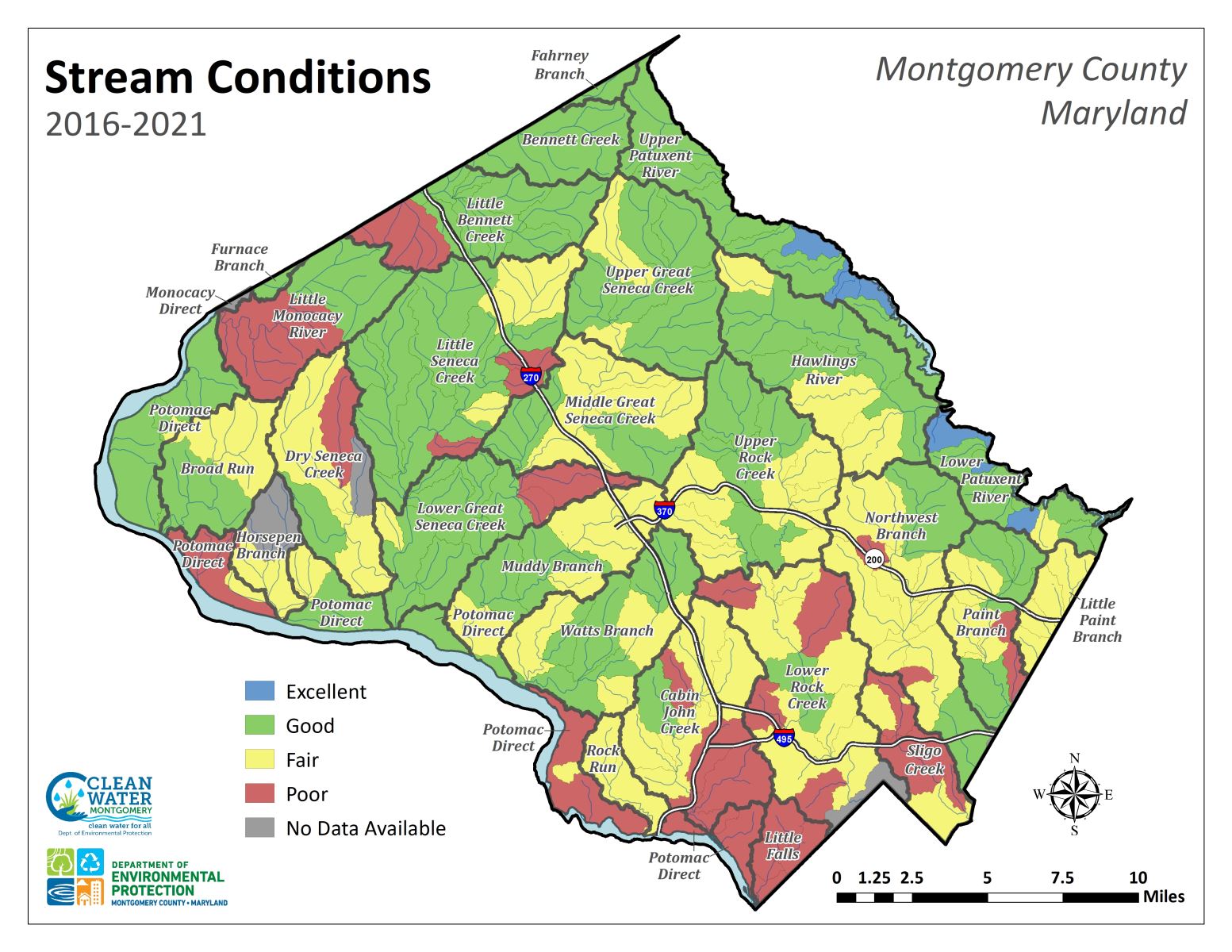
A map of Montgomery County and its major watersheds and their water quality. Stream health ranges from poor to fair to good to excellent across the county.
Whatever goes down our storm drains ends up directly in our beloved Chesapeake Bay. If pollutants like litter, salt, pet waste, and more are left on the ground, they will end up in our water, making our streams unclean and unhealthy for both us and the critters that live there.
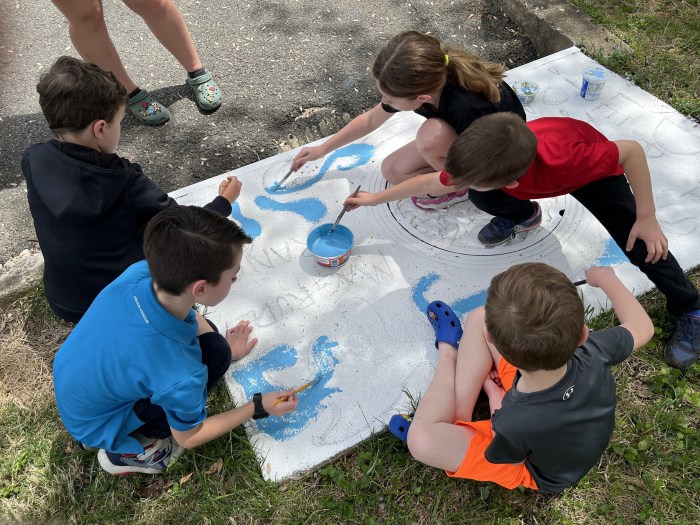
Community projects that mark and paint storm drains can help raise awareness and bring people together! Interested in raising awareness about storm drains? Volunteer as a Stream Steward in our Storm Drain Marking or Storm Drain Art programs! Learn more at the Stream Steward Volunteer Webpage.


Have you seen plastic bags blowing in the wind and getting caught on a tree? Hopefully you’ll see less of that in the coming years because Montgomery County Council passed the Bring Your Own Bag bill. This bill goes into effect January 1, 2026 and means stores will not be allowed to provide plastic bags (with a few exceptions). They can still offer a paper bag, for a 10-cent fee.
Join us in the fight against pollution in our waterways by participating in local clean-up events. Whether you’re picking up litter in your neighborhood or organizing a clean-up initiative, every effort counts! Want to get even more involved? Consider joining the Stream Stewards program to become a steward of our waterways. Let’s work together to keep our streams, rivers, and ultimately, the Chesapeake Bay, clean and thriving! Learn more at the Stream Steward Volunteer Webpage.

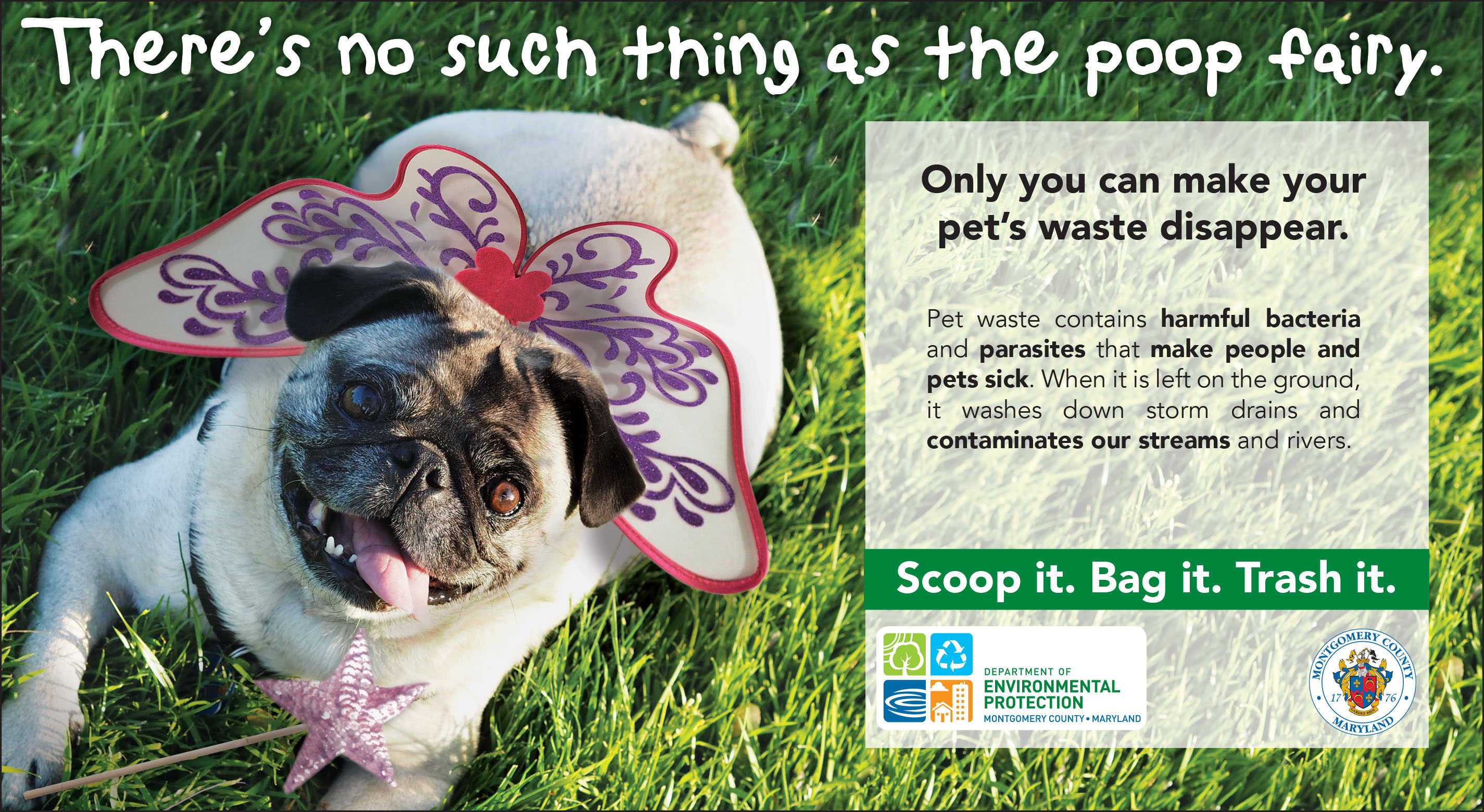
Let’s talk about a small but impactful change we as pet parents can make: managing pet waste responsibly.
Did you know that pet waste left on sidewalks or lawns can wash into storm drains, eventually making its way into our waterways and polluting the Chesapeake Bay? It’s not just unsightly—it’s harmful to the ecosystem. But fear not! You can help by always picking up after your furry friends and properly disposing of their waste in designated areas.
Do you live in an area with a Homeowner’s Association (HOA)? Interested in helping your HOA install pet waste stations in your community? Check out our Pet Waste Management Website.
Let’s keep our waters clean and our Bay thriving!
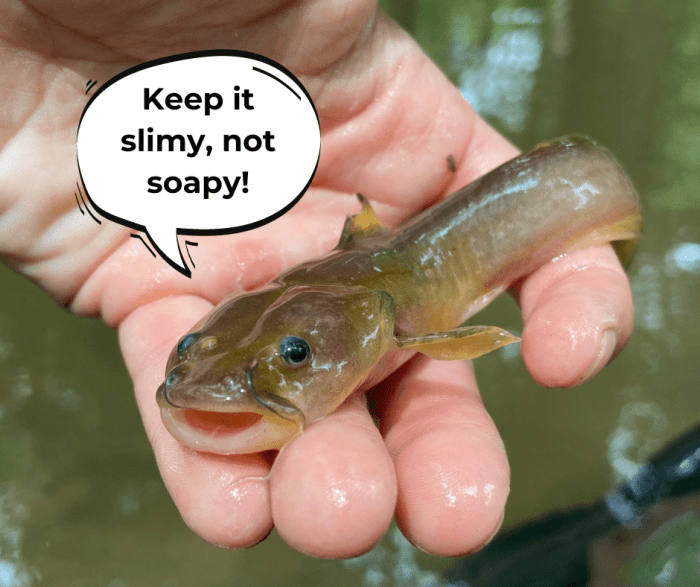
Have you ever touched a fish before? What did it feel like? Was it slimy? Probably!
Fish are covered in a layer of slime, called a slime coat, that protects them from disease and parasites. When soap, like that from a car being washed, flows into a storm drain, it ends up in our streams. When this soap comes into contact with a fish’s slime coat, it “cleans” that coating off! This is very harmful and dangerous to fish, putting them in danger of becoming ill due to disease and parasites. In addition, all the grease and other grime that we wash off our cars can end up in our waterways too!
Opting for a professional car wash instead can make a big difference! Learn more about car washing on the Car Washing Website.
Did you know that traditional lawn care chemicals can harm not only your lawn but also the critters that call it home? Opting for organic lawn care methods helps keep critters, you and your family safe from harmful pesticides and fertilizers! Don’t forget, the chemicals in traditional pesticides can also seep into our waterways, ultimately finding their way to the Chesapeake.
Organic lawns also: improve air quality, produce oxygen, capture and infiltrate stormwater, and reduce erosion.
Learn more about the benefits of organic lawns on our Organic Lawn Care Page.
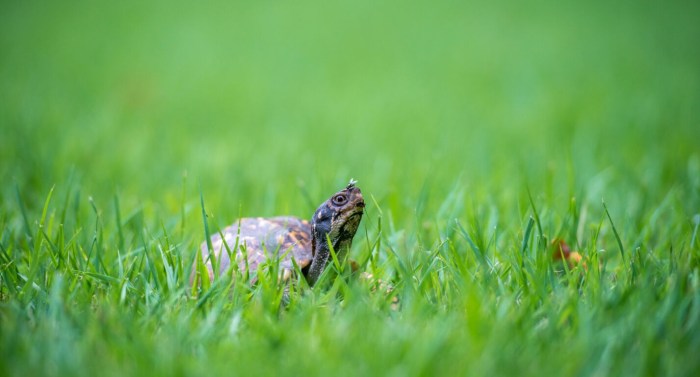
Eastern box turtle in a grassy lawn with a small insect on its nose.
Stormwater facilities, like rain gardens, bioretentions, and dry ponds are like sponges. They soak up water, in this case, stormwater runoff, store it, slowly release it, and filter out pollutants like fertilizers, pesticides, oil, salt, and other chemicals from roads and keep them out of our streams. The slow release of water also helps prevent stream erosion and sedimentation which can be incredibly harmful to overall stream health and aquatic life. And, ultimately, the Chesapeake Bay!
Interested in installing a stormwater management practice on your property? Learn more about how you can use native plants to keep our water clean on the RainScapes Website. Or want advice on how to maintain your facility? Check out the Alliance for the Chesapeake Bay’s Stormwater Maintenance Resource Center.

A gorgeous RainScapes project installed about a decade ago and photographed in May 2024.
Trees naturally filter rainwater. Their leaves and branches slow rain down before it reaches the ground, preventing erosion. Tree roots keep sediment from reaching streams and absorb pollutants that would otherwise make our water unclean.
But to help trees clean our water, we need to make sure we water our trees! The phrase to remember is “25 to stay alive!” Newly planted and young trees need extra water during hot, dry summer months. In fact, they need as many as 25 gallons of water at least once every two weeks between the 4th of July and Labor Day!
Learn more about proper watering and the benefits of trees on the Tree Montgomery Website.

The canopy of a Honey Locust tree.
Many groups are doing a ton of great work to help keep the water in the County healthy and clean.
The Clean Water Montgomery Grant Program funds public outreach and stewardship projects, community-based restoration water quality implementation projects, tree planting and reforestation projects, and litter reduction projects in the Anacostia River Watershed.
Learn more about the grant program on this Clean Water Montgomery Grant Program Webpage.
And keep an eye out for upcoming blogs highlighting work from grantees, including Nature Forward, The Islamic Center of Potomac Green Team, and the CAPA-MC Growing & Giving Club.
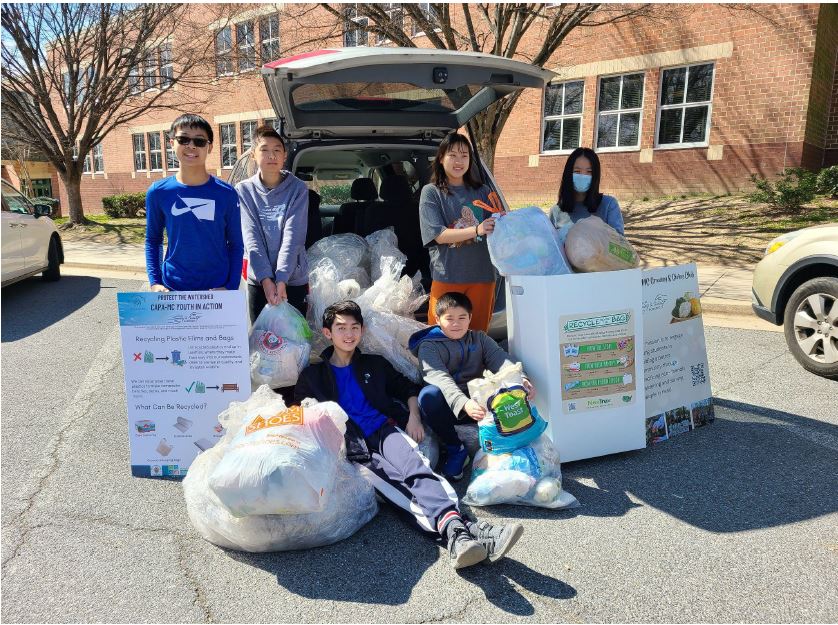
The CAPA-MC Growing & Giving Team educates community members about plastic waste through educating the community and taking action to collect plastic film waste.
Thank you for all you do in your back yard to protect our rivers, streams, and the Chesapeake Bay! At the same time, the County’s Department of Environmental Protection works hard to reduce stormwater throughout the county and restore streams through special projects that repair stream banks, and return streams back to their natural state.
Many of these projects have been installed, or are under construction, throughout the County. Click here to see what projects are near your home. Find Watershed Restoration Project, DEP, Montgomery County Government, MD.
Visit our website to learn more about stream restoration projects (Stream Restoration, DEP, Montgomery County Government, MD) or watch the video below!
Watch the video now (in English or Spanish) below or read on to learn more!
|
|
© 2011 - 2025 My Green Montgomery |

